Blog
Central heating not working? Quick DIY checks & when to call an engineer
Central heating not working? Quick checks before you call a heating engineer
Coming home to a cold house is one of the most frustrating problems for homeowners. If your central heating is not working, it often isn’t an emergency — and many faults can be diagnosed and fixed with a few straightforward checks. This guide walks through the practical steps you can safely take, when to stop and call a Gas Safe registered engineer, and how to give useful information to the engineer when they arrive.
Safety first
Before you begin any troubleshooting, put safety at the top of the list. Make sure you follow these precautions:
- Never attempt to repair gas appliances yourself.
- If you smell gas, turn off the gas supply immediately and call the Gas Emergency Service on 0800 111 999.
- Do not ignore warning lights or error codes on your boiler display.
- If you are unsure about anything, stop and contact a professional.
Simple checks to try first
Work through these checks in order. They are safe for most homeowners and often solve the problem without the need for a call-out.
1. Thermostat settings
The thermostat is a frequent cause of no heating. Check the following:
- Is the thermostat set to “heating” or “auto” rather than “off”?
- Is the set temperature above the current room temperature?
- If it’s battery-powered, is the display working — replace batteries if necessary?
- Is a timer or schedule active that might have switched the heating off?
Smart thermostats can lose their Wi‑Fi connection or revert to defaults after power outages, so check the app or device settings as well.
2. Boiler display and error codes
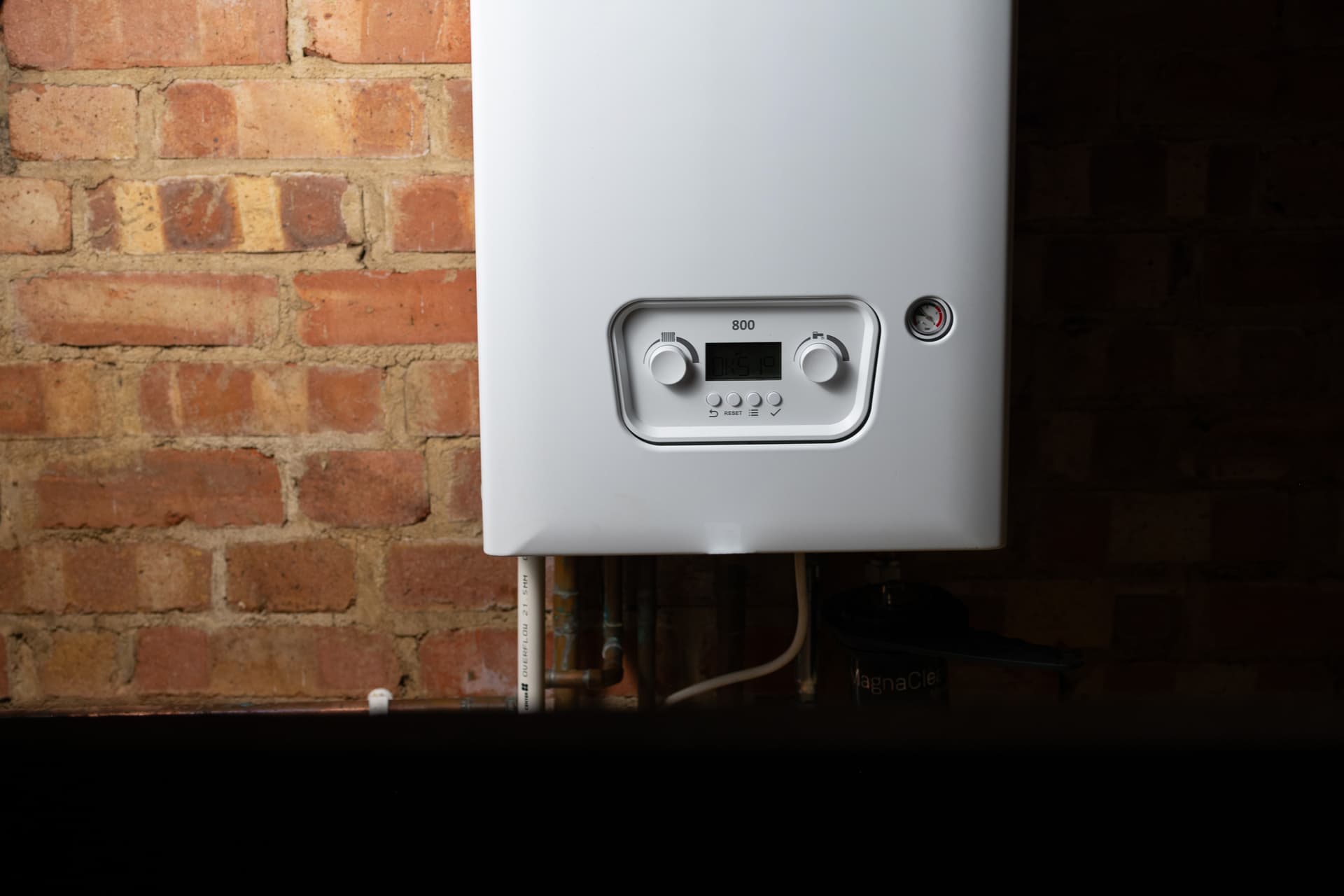
Modern boilers show error codes and warning lights that give valuable diagnostic information. If your boiler has a display, look for:
- Flashing lights or error codes
- Whether the boiler seems to have power
- Any strange sounds from the unit
- Whether the pilot light is lit on older models
Common error codes include indications for ignition/gas supply faults, overheating, fan or flue issues, and water pressure problems. Write down any codes you see — they will speed up diagnosis by a heating engineer.
3. Boiler pressure — how to check and repressurise
Low pressure is one of the most common causes of heating failure on pressurised systems. Locate the boiler pressure gauge (usually 0–4 bar). The normal working range is typically around the middle of the green zone.
- If the needle is below the recommended range, the system needs repressurising.
- If the pressure is too high, do not attempt repairs yourself — contact an engineer.
To repressurise many modern boilers you will use the filling loop (a flexible braided hose beneath the boiler). General steps:
- Turn the boiler off and allow it to cool.
- Check the filling loop valves are closed before you begin.
- Open the valves slowly until you hear water entering the system and the gauge reaches the correct pressure.
- Close the valves and remove the filling loop if it is detachable.
- Turn the boiler back on and check for error codes or leaks.
If you cannot find the filling loop, or you are uncomfortable doing this, contact a qualified engineer.
4. Radiator issues and bleeding
If the boiler is operating but radiators are cold, check:
- Are some radiators hot while others are cold?
- Are radiators hot at the bottom but cold at the top?
- Are thermostatic radiator valves (TRVs) turned up?
- Can you hear gurgling or banging noises from the system?
Radiators that are hot at the bottom and cold at the top usually have trapped air and need bleeding. Procedure:
- Turn the heating off and let radiators cool.
- Start with the radiator furthest from the boiler.
- Place a cloth beneath the bleed valve and turn it anticlockwise with a bleed key until air hisses out.
- When a steady stream of water appears, close the valve clockwise.
- Check boiler pressure afterwards and top up if required.
5. Timer and programmer
Programme settings control when heating comes on. After power cuts or battery changes the timer can reset to an incorrect time or to a holiday mode. Check:
- The current time and day are correct on the programmer
- Heating periods are set for the times you need heat
- There is no active holiday or override mode
6. Electrical supply and switches
Don’t overlook the obvious: ensure the boiler is switched on at the unit and that the fused spur or consumer unit hasn’t tripped. Check any external timers or isolator switches haven’t been turned off.
When to stop and call a Gas Safe engineer
If these checks don’t restore heating, or if you encounter any of the following, call a Gas Safe registered heating engineer immediately:
- You smell gas
- Persistent or unexplained error codes
- Loud or unusual noises from the boiler
- Water leaking from the boiler or system
- The pilot light won’t stay lit on older boilers
- You’re not comfortable performing any of the checks
When instructed to call out an engineer, provide clear details to help them diagnose efficiently.
How to communicate effectively with your engineer
Before the visit, note down:
- Exactly what is happening (no heat, some radiators cold, loss of hot water)
- Any error codes or lights you recorded
- Which checks you have already completed
- When the fault started
- The make and model of your boiler, if known
Giving this information in advance helps the engineer arrive prepared and may speed up repair time.
Preventive maintenance to avoid future breakdowns
Regular maintenance reduces the risk of unexpected failure. Key actions:
- Arrange annual boiler servicing to ensure safe, efficient operation.
- Check boiler pressure monthly during the heating season.
- Bleed radiators at the start of each season and after any system work.
- Keep the boiler area clear and ensure ventilation isn’t blocked.
For professional servicing and planned maintenance, see our boiler servicing page for details on scheduled checks and cover options: Boiler servicing.
Why hire a professional
Basic troubleshooting saves time and money, but complex or gas-related faults need a Gas Safe registered engineer. Our team has over 30 years’ experience working across Chiswick, Kensington, Hammersmith and Ealing. We are accredited by major manufacturers and can provide repair, servicing and installation backed by the correct qualifications and warranties.
If you’ve worked through these steps and your central heating is still not working, or you prefer an expert to carry out checks and repairs, get in touch via our contact page: Contact us.
Other Articles